


When you're standing on a dealership lot deciding between two nearly identical SUVs at the same price point, the one factor that tips your decision more often than not? Vehicle safety ratings influence. That five-star sticker on the window. That IIHS Top Safety Pick badge on the marketing material. You don't think about it consciously—but you're being influenced by them, and for good reason. Safety remains one of the most important factors influencing buying decisions in 2026, and the ratings themselves have gotten both smarter and more brutally honest about what "safe" actually means.
But here's what most people get wrong: you think you understand what those ratings mean. You probably don't. And the automakers—they're betting on that.
How Vehicle Safety Ratings Influence Your Gut Instinct
The moment you glance at safety ratings, something primal happens. Your brain doesn't need to process complex crash-test data. NHTSA's 5-Star Safety Ratings help you make smart decisions about safety when buying a car. The number is there. The choice feels safer.
This isn't accidental psychology. Car manufacturers often strive to achieve high ratings as they can significantly impact a consumer's buying decision. They redesign bumpers, add crumple zones, and engineer passive restraint systems specifically to move the needle on these evaluations. The influence of IIHS and NHTSA extends far beyond consumer information — manufacturers now design vehicles specifically to perform well during these evaluations.
What actually matters is this: you're not just buying a car. You're buying a vehicle that was engineered, from the ground up, to pass a test. Sometimes that test reflects reality. Sometimes it doesn't.
Vehicle Safety Ratings Influence How Much You Spend (Without You Realizing It)
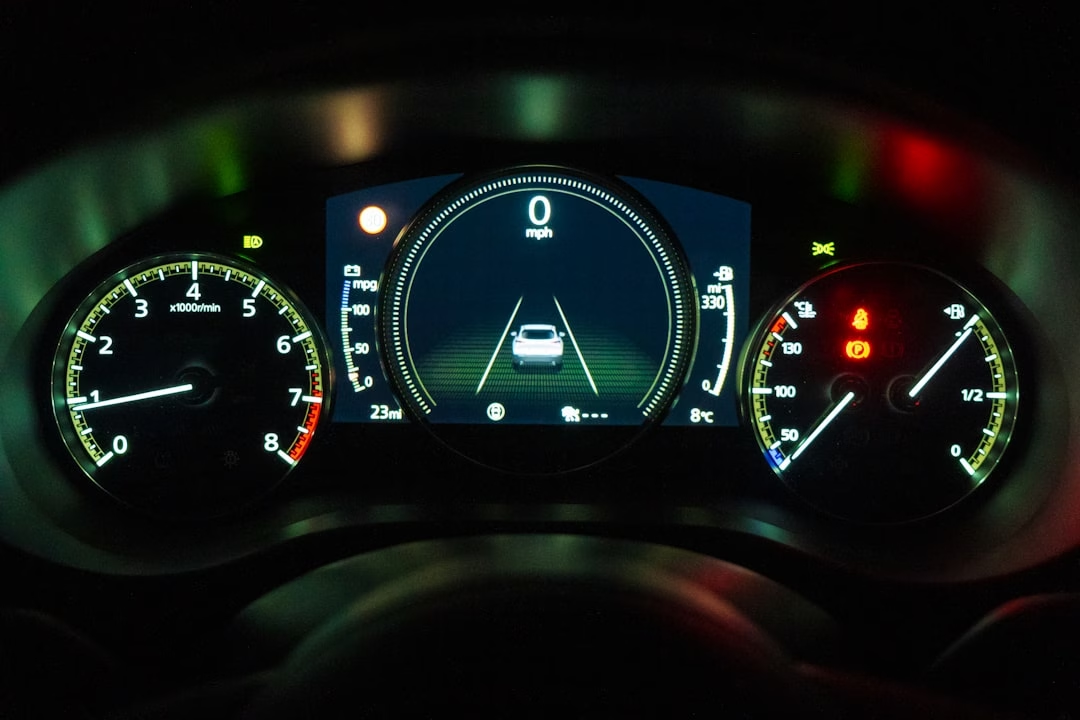
I spent a weekend last year comparing the 2026 Mazda CX-50 and a competitor model that cost $3,200 less. The CX-50 came with automatic emergency braking, blind-spot monitoring, and lane-keep assist as standard. The cheaper model? Those features were optional, bundled into a $2,800 package. When you do the math, you're not really getting a better deal—you're just getting upfront honesty about what features cost.
This is where vehicle safety ratings influence matters beyond philosophy. Mazda earned eight IIHS Top Safety Pick Plus awards for 2026 — more than any other brand — and the CX-50 comes with blind-spot monitoring, rear cross-traffic alert, lane departure warning with lane-keep assist, automatic emergency braking with pedestrian detection, and driver attention alert as standard.
But here's the catch: not all safety-rated vehicles make those tech features standard. Consumer Reports has documented patterns in which automakers win safety awards while still requiring buyers to upgrade past base trims to access the features that most directly prevent crashes. You get a five-star rating on a base model, but the actual crash-prevention technology—the stuff that stops accidents from happening in the first place—costs extra.
What Vehicle Safety Ratings Influence (And What They Don't)
The updates to five-star safety ratings for the 2026 model year aim to empower consumers with more up-to-date and relevant safety information when purchasing a vehicle, incorporating advanced crash avoidance and crashworthiness measures to protect pedestrians. This was a seismic shift. For decades, NHTSA focused on occupant protection—did the airbag deploy? Did the frame hold? Did anyone in the front seat survive?
Starting in 2026, the tests changed. Now they measure whether your car prevents the crash from happening at all. Pedestrian detection. Automatic emergency braking at highway speeds. Crash-avoidance tech that actually works.
What the ratings still don't measure? Real-world behavior. They measure controlled impact performance under specific conditions, not the legal, environmental, and human variables that determine what actually happens when a real crash occurs.
A five-star car driven by someone who isn't paying attention is still going to crash. A three-star car driven defensively won't.
The Brands that Get it Right (And the Ones that Game It)
When I looked at the 2026 Hyundai Santa Fe Hybrid, which earned an IIHS Top Safety Pick+ award with highly responsive maneuverability and brief stopping distances, something clicked. This wasn't just a vehicle with good scores. It was a vehicle engineered to stop quickly. To handle predictably. To prevent accidents before they happened.
Mazda. Subaru. Hyundai (in some models). These brands show up consistently at the top of the ratings—not because they're gaming the system, but because they've committed to actual safety architecture. Safety evaluations factor in braking and handling performance, crash-test results, and standard advanced driver-assistance technologies like automatic emergency braking with pedestrian detection, blind spot warnings, and rear cross traffic warnings.
Then there are the brands that have strong sales but middle-of-the-road safety profiles. They're safe enough. They meet the federal minimums. But they're not designing with safety as the primary engineering constraint.
The 2026 Update Changed Everything (For the Better, Mostly)
Here's something that won't get talked about much: 2026 was the year the game actually shifted. To earn a TSP+ rating in 2026, vehicles must now meet all qualifications and earn a Good rating in the IIHS pedestrian front crash-prevention test and a Good or Acceptable rating in the new IIHS vehicle-to-vehicle front crash-prevention test — IIHS requirements for earning a TSP award get tougher every year.
This matters. Because it means if you're shopping right now, the vehicles with Top Safety Pick awards genuinely earned them against harder standards.
The catch? Fewer vehicles qualify. The Insurance Institute for Highway Safety expanded its list of the safest new cars for the 2026 model year, and it now includes more than a dozen sedans and SUVs with starting prices below $30,000. That's genuinely good news if you're on a budget. It means top-tier safety isn't exclusive to luxury vehicles anymore. The IIHS released its list of the safest new cars for the 2026 model year showing that top-tier safety is no longer limited to luxury vehicles, and features like automatic emergency braking, lane-keeping assist, and adaptive cruise control are now standard in many vehicles across price ranges.
But it also means you can't just buy whatever's popular and expect it to be safe. Some bestselling models didn't make the list.
Frequently Asked Questions
How do Vehicle Safety Ratings Influence My Insurance Premiums?
Vehicle safety ratings influence insurance quotes in subtle ways. Insurers use NHTSA and IIHS data to assess claim risk—if a vehicle consistently protects occupants better, you'll statistically file fewer injury claims. Most insurers don't apply massive discounts for high-rated vehicles, but some offer 5-10% reductions for cars with superior crash-avoidance technology as standard equipment. The real savings come from not getting into accidents in the first place.
Do Vehicle Safety Ratings Influence Resale Value?
Yes. A used car with top safety ratings commands higher resale prices, roughly 3-8% above average depending on market conditions. Buyers doing homework understand that a vehicle with a solid safety history costs less to insure and carries lower liability risk. Dealerships know this. They price accordingly.
What Should I Prioritize???Nhtsa Ratings or Iihs Ratings?
Both matter, but they measure different things. NHTSA focuses on crashworthiness (what happens during impact), while IIHS emphasizes crash avoidance and prevention. If you're buying in 2026, look for vehicles that perform well on both scales. A car rated five stars by NHTSA but without standard automatic emergency braking isn't actually safer than one with three stars and comprehensive crash-prevention tech.
How Much do Vehicle Safety Ratings Influence Which Features I Should Buy Optional?
Vehicle safety ratings influence your baseline choice, but optional tech is where real-world safety happens. If a vehicle doesn't come standard with automatic emergency braking with pedestrian detection, it should be your first add-on. Blind-spot warnings and lane-keep assist matter less—you're your own backup camera and lane marker. But crash-prevention tech? That's worth paying for.
Can You Have a Low Safety Rating and Still be Safe to Drive?
Vehicle safety ratings influence perception more than absolute safety, honestly. A three-star vehicle driven by a cautious, attentive driver is statistically safer than a five-star vehicle driven by someone checking their phone. But ratings exist for a reason. Higher-rated vehicles give you a margin for human error—the systems catch you when you slip up. In a three-star car, you have to be perfect.
The Real Takeaway: Ratings are a Starting Point, Not the Finish Line
Here's what I've learned from following this industry for years: safety ratings matter enormously. They push manufacturers to innovate. They give consumers a credible benchmark. They've genuinely saved lives. But they're not destiny.
While ratings are valuable tools, remember to consider your unique preferences, budget, and lifestyle — research various ratings and reviews and focus on aspects important to you.
When you're evaluating your next vehicle, start with how vehicle safety ratings influence the shortlist. Check NHTSA and IIHS scores. Look at what features come standard, not optional. Then test-drive the finalists and pay attention to how they handle, how responsive the brakes are, how the visibility is. Because the safest car in the world is useless if you can't see around it or trust how it responds under pressure.
The stars matter. But they're not the whole story.

