
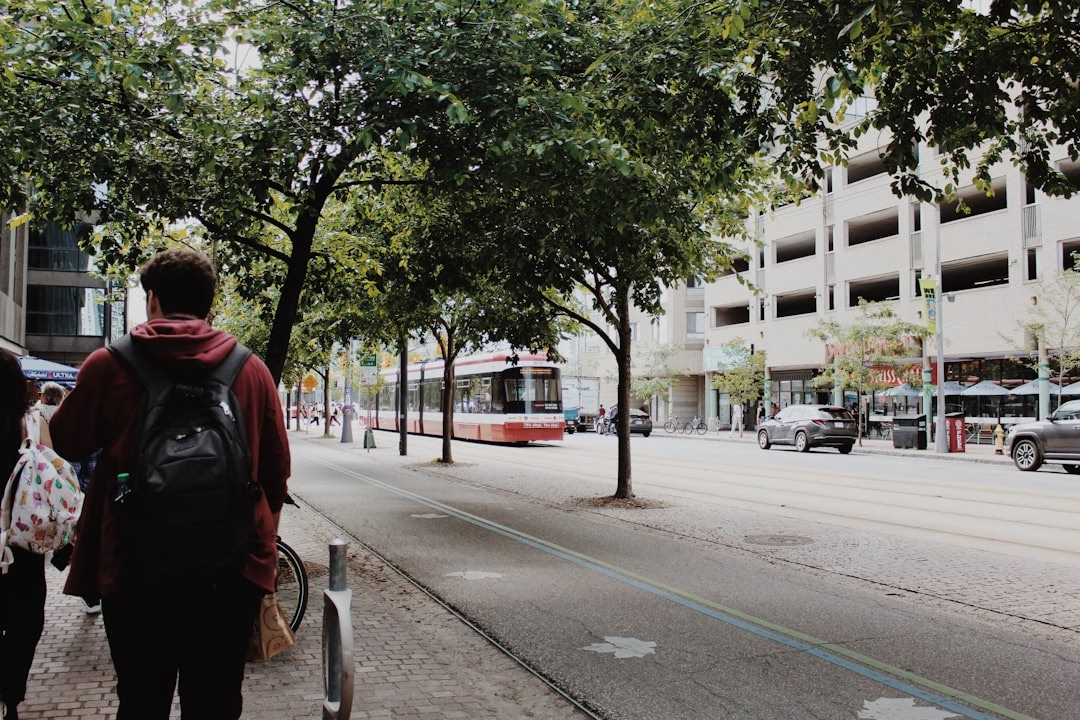

The growing role mobility hubs are playing in future cities represents one of the most practical — if unglamorous — solutions to urban chaos. You've probably walked past one without realizing it was there. It might've been a cluster of bike racks, e-scooter stations, and a bus shelter all tucked together near a train platform. Or maybe it was a dedicated parking lot next to a car-share spot and transit kiosk. Not flashy. Not an autonomous flying taxi. But genuinely useful.
And that's exactly why cities are doubling down on them.
What Exactly is a Mobility Hub (And Why Should You Care)?
Here's the thing: mobility hubs aren't new in concept, but they're becoming indispensable in execution. Think of them as junction boxes for how people move. A central train station, a multimodal park and ride, a village market square with electric scooter parking, or a car-sharing station next to a bus stop and bike parking space are all mobility hubs.
The core idea is dead simple. Instead of fumbling with three different payment apps to get across town, you pull up to one hub and choose your mode: bike, e-scooter, car-share, public transit, or some combination. One account. One experience. One app, ideally.
As cities grapple with traffic congestion and service inequities, mobility hubs offer a scalable solution to align increasing travel demand with sustainability goals. But here's where most city planners get it wrong: they build the hub and assume people will show up. The real work is integration. You can have the world's best e-scooter station sitting three blocks away from the bus stop, and nobody will use it because there's no seamless connection between them.

The Growing Role Mobility Hubs Play in Reducing Car Dependency
Here's where the rubber meets the road (pun absolutely intended). In this year's Eurocities Pulse Mayors Survey, 60% of mayors ranked expanding public transport as a top priority. But expanding isn't enough. You need to make the existing system actually functional. That's where the growing role mobility hubs comes in.
The math is simple. Electric bikes and scooters extend the practical walking distance from transit hubs, and such micromobility solutions are increasingly vital to urban transportation networks, yet these solutions often lack integration with main transportation systems that would make them truly seamless.
I once spent a frustrating morning in Copenhagen trying to explain to a tourist why the bike rental app didn't connect to the metro system. The infrastructure existed. The problem wasn't the bike or the metro — it was the gap between them. That's what mobility hubs solve. They're the connective tissue.
A societal cost–benefit analysis of the Dutch public transport bike system (OV-fiets) demonstrates that bike-sharing integrated with public transport can generate significant societal benefits, including improved first- and last-mile connectivity, increased public transport use, and positive environmental and welfare effects.
Growing Role Mobility Hubs Play in Sustainability Goals
Honestly, this is where things get interesting — and where cities actually have skin in the game. The escalating demand for urban mobility has significantly contributed to increased CO2 emissions, necessitating a shift towards sustainable, low-carbon transportation solutions, with emerging modes and concepts such as micro-mobility, shared mobility, electric mobility and mobility hubs offering promising pathways to reduce vehicle CO2 emissions.
But here's the catch: a mobility hub sitting in a suburban office park where everyone still drives is worthless. The growing role mobility hubs can play depends entirely on whether they're strategically placed in neighborhoods where people actually live and work.
A regional evaluation of 1100 candidate locations highlights that optimal hub siting varies by planning objective, with hubs along intercity corridors and urban peripheries yielding the largest behavioral impacts. Translation: placement is everything.
The real opportunity is bigger. Looking ahead, EGUM's 2026 focus will include urban nodes, city access, multimodal passenger hubs, active mobility, and supporting the EU Sustainable Tourism Strategy. European cities are treating this as infrastructure policy, not a side project.
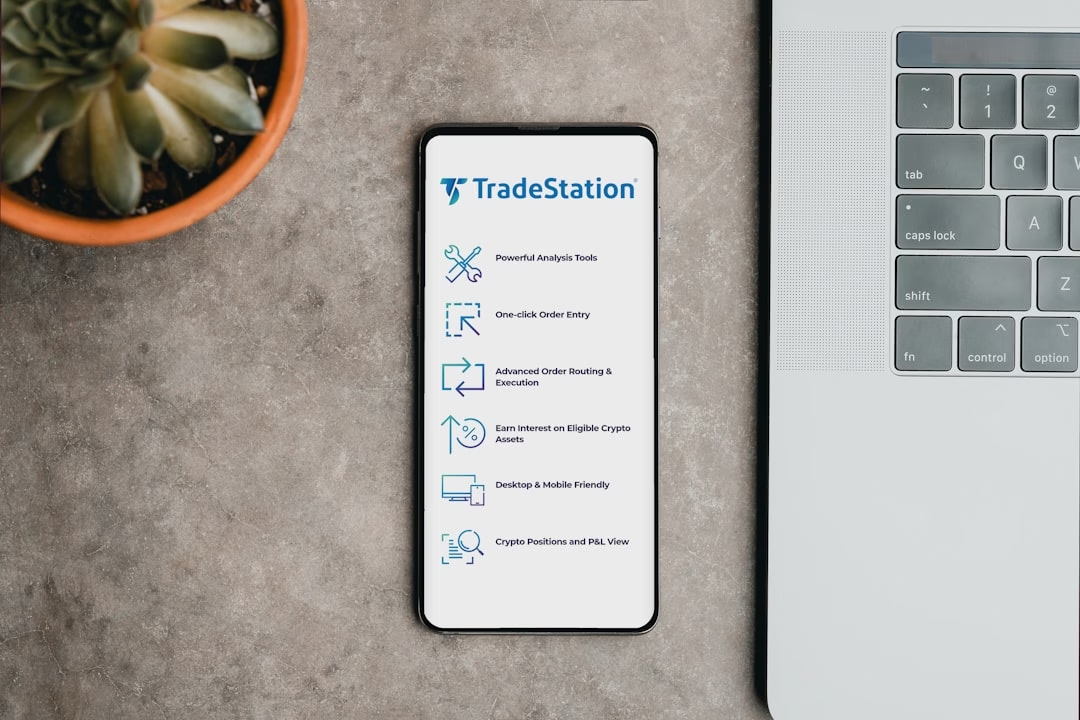
How Mobility-As-A-Service (Maas) Powers the Growing Role Mobility Hubs
You know what actually makes mobility hubs work? Software. Specifically, the rise of Mobility-as-a-Service (MaaS) is reshaping how people plan and pay for travel, with commuters turning to integrated platforms instead of using separate apps for buses, trains, and ride-hailing, allowing seamless booking and payment across multiple modes of transport, with MaaS expected to be the standard in many global cities by 2026.
This changes everything. With MaaS, the growing role mobility hubs becomes less about physical infrastructure and more about algorithmic orchestration. The system doesn't just offer you options — it nudges you toward the most efficient, cheapest, or lowest-emission option based on real-time conditions.
Want to compare a 20-minute drive versus a 22-minute combination of metro + bike? One app shows you both, with pricing integrated, in seconds. Does that work? Most days, yes. Does it always work perfectly? No. Sometimes the bike rack is full. Sometimes the train is delayed. But the floor is set by integration, not infrastructure alone.
The platforms doing this well include data management, real-time occupancy feeds, and dynamic pricing. Cities like Singapore have been ahead here for years, but the trend is accelerating across Europe and North America in 2026.
The Funding Question: Who Actually Pays for This?
Let's talk money. Building mobility hubs requires capital upfront, and that's where the growing role mobility hubs gets complicated politically.
Mayors point to chronic underfunding as the greatest barrier, with 57% citing insufficient investment in expansion, maintenance and fleet renewal. This is the real constraint, not technology. You can have the best hub design in the world, but if you don't have money to maintain it, it rots.
AARP grant helps Minneapolis improve its mobility hubs — that's one example of creative funding, but it's anecdotal. Most cities are competing for the same shrinking pool of transportation funding. The European approach is different. Rather than treating mobility hubs as a standalone project, they're integrating them into broader urban planning — which means the funding comes from multiple pots: transit budgets, sustainability funds, economic development grants, and sometimes developer contributions.
The real question is whether cities will prioritize this. If they do, the money usually follows.
Challenges and Why Growth Isn't Guaranteed
Here's where I push back on the optimism (yes, I'm hedging my own predictions). The growing role mobility hubs won't happen uniformly across all cities. Some cities will nail it. Others will build expensive hubs that nobody uses.
The barriers are real:
- Operator coordination. Getting a bus company, bike-share operator, car-share service, and e-scooter company to actually work together is like herding cats with competing business models.
- Data silos. Each operator wants to own their data. Making that data available in a unified MaaS system requires legal agreements that don't always exist yet.
- Infrastructure decay. Bikes get stolen. Scooters get abandoned. If maintenance isn't built in from the start, the hub becomes a junkyard.
- Behavioral inertia. Even when everything works, people still prefer driving. Habit is powerful.
Cities continue to face growing pushback and barriers from the national and European levels of government like insufficient funding, regulatory obstacles, and lack of support for expanding public transport and clean transport initiatives.
Frequently Asked Questions
What's the Difference Between a Mobility Hub and a Transit Center?
A mobility hub is specifically designed for seamless transfers across multiple modes — bikes, scooters, buses, trains, car-share — often with integrated ticketing and real-time information. A traditional transit center typically focuses on a single dominant mode (usually buses) with limited integration. The growing role mobility hubs emphasizes intermodal connection, whereas transit centers are often siloed by mode.
Will the Growing Role Mobility Hubs Actually Reduce Traffic Congestion?
Yes — but only if properly designed and placed. Studies show that integrated first- and last-mile solutions reduce car trips by shifting them to public transit plus micromobility. However, a poorly integrated hub in the wrong location will collect dust. Placement, coordination, and software integration are critical to success.
How Much does it Cost to Build a Mobility Hub?
Costs vary wildly depending on scale and location. A small neighborhood hub with bike parking, e-scooter docks, and bus shelter integration might run $200,000–$500,000. A major intermodal hub with parking, car-share, and real-time systems can exceed $2–5 million. The growing role mobility hubs in 2026 means many cities are testing pilot programs at the lower end first.
Are Mobility Hubs Just for Dense Urban Areas?
Not necessarily. Suburban and smaller cities can benefit too — particularly along commuter corridors. However, density helps. In low-density areas, mobility hubs work best for connecting regional transit lines (intercity trains, buses) with local first-mile options.
How do Mobility Hubs Handle Equity and Access?
This is critical and often overlooked. Poorly designed hubs can create access barriers for elderly residents, people with disabilities, and lower-income communities. Best practice includes accessible parking, clear signage, multiple payment options (including cash), and affordable pricing tiers. The growing role mobility hubs must include intentional equity design, or they risk exacerbating existing transportation disparities.
The Bottom Line: Why this Matters Right Now
The growing role mobility hubs in future cities isn't about technology breakthrough. It's about pragmatism. Cities are realizing that autonomous vehicles are decades away (or maybe never), but mobility hubs can work today with today's infrastructure, today's apps, and today's funding levels.
You don't need a flying taxi to solve urban mobility. You need buses to run on time, bikes to park safely near train stations, e-scooters to connect the last mile, and one app to tie it all together. Mobility hubs do that.
The cities that move quickly on integration and coordinate funding across operators will pull ahead. The cities that treat mobility hubs as a checkbox project will end up with expensive infrastructure that nobody uses. The difference? Strategy, governance, and an honest commitment to actually changing how people move — not just adding more transit options and hoping.

