

India is a major automobile market, offering consumers an expansive selection of cars. The Indian automotive industry is dominated by several major brands like Maruti Suzuki, Hyundai, Tata Motors, Mahindra & Mahindra and Honda, offering affordable small cars to luxury models to meet everyone’s needs. Furthermore, the Indian government has taken several initiatives and policies to promote the growth of the electric vehicle market within the country.
India’s top car brands include:
10. Volkswagen
Volkswagen is a German carmaker with an established presence in India’s market.

Here’s everything you need to learn about purchasing a Volkswagen vehicle:
- Introduction: Volkswagen first entered the Indian market with its Jetta sedan model. Since then, they have expanded their offering and offer various models across different segments.
- Models: Volkswagen offers a selection of cars in India, such as hatchbacks, sedans and SUVs. Popular models include the Volkswagen Polo, Vento and T-Roc.
- Manufacturing: Volkswagen operates a manufacturing plant in Chakan, Pune, where they manufacture some of their cars locally. The facility has an annual production capacity of 200,000 vehicles.
- Sales & Service: Volkswagen has a network of dealerships across India where it sells and services its cars. In addition, Volkswagen provides after-sales services such as maintenance, repairs, and spare parts.
- Technology: Volkswagen cars in India come equipped with various features and technologies, such as touchscreen infotainment systems, automatic climate control, airbags, ABS, and ESC (Electronic Stability Control).
- Future Plans: Volkswagen India will introduce more models in the Indian market, including the Volkswagen Taigun compact SUV and Virtus mid-sized sedan.
Volkswagen has a substantial presence in the Indian market and offers an array of cars to meet different customer demands. Furthermore, V.W. is investing heavily and plans to expand its portfolio over the coming years.
9. Ford
Ford is an American multinational automobile company headquartered in Chennai, Tamil Nadu. Established in 1995, the subsidiary of Ford Motor Company operates here with a range of cars and SUVs to cater to various customer segments.

Here is a detailed overview of Ford’s operations in India:
- Ford India Has Two Manufacturing Facilities in Chennai and Sanand, Gujarat. The Chennai plant can produce up to 200,000 engines and 340,000 vehicles annually, while the Sanand plant can produce up to 240,000 cars annually.
- Product Portfolio: Ford India offers a vast selection of cars and SUVs in India, such as the Ford Figo, Aspire, Freestyle, EcoSport and Endeavour. Additionally, the company recently unveiled the Mustang model here too.
- Sales and Service Network: Ford India boasts an impressive sales and service network in India, boasting more than 400 outlets nationwide. Furthermore, the company offers a 24×7 Roadside Assistance program to assist its customers during breakdowns or emergencies.
- Partnerships and Collaborations: Ford India has partnered with several Indian companies, such as Mahindra and Mahindra, to develop and manufacture new products. In 2019, Ford and Mahindra announced a joint venture to produce and market electric vehicles in India and other emerging markets.
- Community Development: Ford India is dedicated to social responsibility and community development initiatives in India. They have collaborated with several NGOs and other organizations on education, health, and environmental sustainability programs nationwide.
Ford India has a major presence in the Indian automobile industry, providing its customers with various products and services while contributing to community development through CSR initiatives.
8. Renault
Renault is a French multinational automobile manufacturer that has been present in the Indian market since 2005.
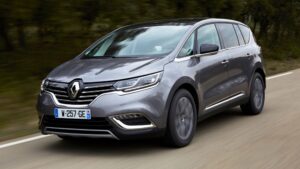
Here are some key facts about Renault cars sold here:
- History: Renault first entered the Indian market through a joint venture with Mahindra & Mahindra called Mahindra Renault in 2005. Later, it became a wholly-owned subsidiary of Renault and rebranded as Renault India Pvt Ltd.
- Popular Models: Popular Renault models in India include the Kwid hatchback, Duster SUV and Triber MPV.
- Manufacturing: Renault has a manufacturing facility in Chennai, Tamil Nadu, where it produces cars for the Indian market and international export.
- Sales & Service: Renault has an expansive network of dealerships and service centres throughout India. As of 2021, there were approximately 500 sales outlets and 475 service outlets nationwide.
- Future Plans: Renault India has ambitious plans to introduce more new models in the coming years, including its compact SUV Kiger which will go on sale in early 2021. Moreover, Renault is developing an electric car specifically for Indian consumers.
- Market Position: Renault has a relatively small market share in India, accounting for only 2% of the overall passenger vehicle market as of 2020. Nonetheless, their sales and market share have steadily increased over recent years.
7. Toyota
Toyota has been a prominent car brand in India for several years.

Here’s an overview of Toyota cars in the country:
- History: Toyota entered the Indian market in 1997 through a joint venture with Kirloskar Group, an Indian conglomerate. They launched Toyota Qualis, an iconic multi-utility vehicle (MUV) that was popular among Indian customers. Toyota Kirloskar Motor Private Limited (TKM), a subsidiary of Toyota Motor Corporation from Japan, has a manufacturing plant near Bangalore called Bidadi.
- Product Line: Toyota offers a diverse selection of cars in the Indian market to suit different segments. It has a strong presence in mid-size sedans like the Toyota Corolla Altis and premium SUVs like the Fortuner. Other popular Toyota models include Innova Crysta, Yaris and Camry models.
- Manufacturing: Toyota’s manufacturing plant in Bidadi, near Bangalore, produces models for the Indian market. With an annual capacity of 310,000 units and over 6,500 employees, this facility also houses Toyota’s research and development centre for products tailored to this region.
- Sales & Service: Toyota has an extensive sales and service network in India, with over 300 dealerships nationwide. Its mobile app also enables customers to book services, schedule maintenance appointments, and monitor their vehicle’s service history. Moreover, Toyota provides various after-sales services like extended warranties and roadside assistance.
- Future Plans: Toyota has announced its intentions to introduce a range of electric and hybrid vehicles in India within the next few years, along with investing $2 billion over these same few years to develop and manufacture electric cars and other mobility solutions.
Overall, Toyota is a well-respected car brand in India with a dominant presence in the mid-size sedan and premium SUV segments. It has earned itself an impeccable reputation for dependability, durability, and quality assurance and has pledged to invest heavily in the Indian market over time.
6. Honda
Honda Cars India Limited (HCIL) is a subsidiary of Honda Motor Company in Japan that was established in 1995 and began operations two years later, in 1997.

Headquartered in Greater Noida, Uttar Pradesh, India, HCIL provides several key facts about Honda cars sold here:
- Honda currently sells various vehicles in India, such as sedans, hatchbacks, SUVs and MPVs.
- Popular models from Honda in India include Honda City, Amaze, WR-V, Jazz and Civic.
- Honda India operates two manufacturing facilities in Greater Noida and Tapukara, Rajasthan.
- In 2021, Honda India announced discontinuing their entry-level hatchback model, the Honda Jazz.
- Honda has been making strides to introduce electric vehicles into the Indian market, with plans to launch a fully-electric car by 2024.
- Honda is also developing a hydrogen fuel cell vehicle, which it hopes to launch in India soon.
- Honda has a strong presence in the Indian two-wheeler market with brands such as Activa, Dio and CB Shine.
- Honda boasts an expansive network of dealerships and service centres throughout India, giving customers convenient access to sales and after-sales support.
5. Kia Motors
Kia Motors Corporation, commonly known as Kia, is a South Korean automotive manufacturer that has been active in India since 2019. Their mid-size SUV model, the Kia Seltos, became popular within this market.
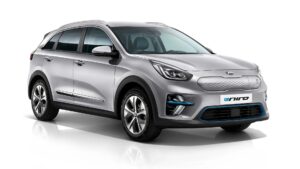
Here’s a step-by-step overview of Kia Motors in India:
- Entry Into the Indian Market: Kia officially entered the Indian market in August 2019 with the launch of their Kia Seltos model. They invested an impressive $1.1 billion into a new production facility in Andhra Pradesh, India, to produce cars both for domestic and export markets.
- Launch of Kia Seltos: Launched in August 2019, the Kia Seltos quickly gained popularity within India’s mid-size SUV segment. Customers loved it, helping Kia become a serious contender in the automotive market.
- Additional Models: Following the success of the Seltos, Kia has released other models in India, such as the Kia Carnival MPV and Sonet subcompact SUV. Both these products have been well received by customers, allowing Kia to consolidate its position in this competitive space further.
- Sales Network: Kia boasts an expansive sales network in India, boasting 300 touchpoints across 200 cities. Furthermore, the company has implemented various initiatives, such as the Kia Care program to guarantee customers have a smooth ownership experience.
- Future Plans: Kia has revealed its intentions to introduce several new models in the Indian market over several years, such as a mid-size MPV, subcompact SUV and electric vehicle. Furthermore, they plan to increase their production capacity in India to serve domestic and export markets.
Overall, Kia has impacted the Indian market with its attractive design, features, and competitive pricing. The company has become an essential player in this space.
4. Mahindra & Mahindra Limited (M&M)
M&M is an Indian multinational automobile manufacturing corporation headquartered in Mumbai, Maharashtra, India.

Here are some key facts about the company:
- History: Mahindra & Mahindra was established in 1945 as a steel trading company by brothers J.C. Mahindra and K.C. Mahindra, with Malik Ghulam Mohammed as its president. In 1947 they ventured into automobile manufacturing by assembling Willy’s jeeps under license from Willys-Overland Corporation.
- Products: Mahindra & Mahindra is primarily known for producing utility vehicles and tractors. Its popular models in India include the Bolero, Scorpio, Thar, XUV500 and Alturas G4 SUV. Furthermore, the company manufactures commercial vehicles like trucks, buses, and electric cars.
- Joint Ventures: Mahindra & Mahindra has several joint ventures with international companies like Ford, Renault and Mitsubishi. One such partnership is Mahindra Ford India Limited (MFIL), a 51:49 joint venture between them dedicated to developing and manufacturing new vehicles for India and other emerging markets.
- Acquisitions: Mahindra & Mahindra has acquired several companies to expand its business. In 2010, it purchased a 55% stake in SsangYong Motor Company, a South Korean automaker; two years later, it acquired 100% control of Australian tractor manufacturer Gippsland Aeronautics.
- Global Reach: Mahindra & Mahindra has an expansive global presence with operations in over 100 countries. Its manufacturing facilities can be found worldwide, such as in India, South Korea, the United States, South Africa and Brazil.
- Sustainability: Mahindra & Mahindra has demonstrated its commitment to sustainable business practices by taking several initiatives. In 2020, it launched electric vehicles in India and announced plans to become carbon-neutral by 2040. Furthermore, its efforts were recognized when the company was named to the Dow Jones Sustainability Emerging Markets Index for the ninth consecutive year in 2020.
3. Tata Motors
Tata Motors is one of India’s largest automotive manufacturers, producing various products, including passenger cars, commercial vehicles and electric vehicles.
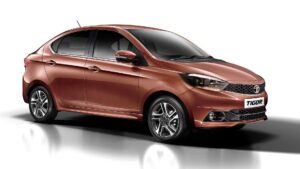
Here’s an in-depth overview of Tata Motors:
- History: Tata Motors was established in 1945 as a division of Tata Sons Limited. They began manufacturing commercial vehicles in 1954 and passenger vehicles with the launch of the Tata Sierra in 1991.
- Product Portfolio: Tata Motors offers an extensive selection of passenger cars, such as the Tata Tiago, Tigor, Altroz and Nexon models; Harrier and Safari models, too; plus commercial vehicles like trucks and buses. Recently they ventured into electric vehicle manufacturing with the launch of Tata Nexon E.V. and Tigor EV models.
- Sales and Service Network: Tata Motors boasts an extensive sales and service network in India, boasting over 750 outlets and more than 2,000 service centres across the country.
- Manufacturing Facilities: Tata Motors has several manufacturing facilities throughout India, such as those in Pune, Jamshedpur, Sanand and Lucknow. Furthermore, the company has establishments in South Africa, Thailand and the United Kingdom.
- Innovation and Technology: Tata Motors has invested heavily in research and development to stay ahead of the technology curve. They have established a dedicated research centre in Pune and partnered with global technology firms to develop advanced solutions.
- Joint Ventures: Tata Motors has joint ventures with global automotive manufacturers, such as the Tata Marcopolo joint venture with Marcopolo S.A. for bus and coach production and the Tata Cummins joint venture with Cummins Inc. for engine manufacturing.
- Sustainability: Tata Motors is dedicated to sustainability, having implemented several initiatives to reduce its carbon footprint and conserve natural resources. The company has set a goal of becoming carbon neutral by 2030 and launching several electric and hybrid vehicles to cut emissions.
2. Hyundai
Hyundai Motor India Limited (HMIL) is a subsidiary of South Korean automotive giant Hyundai Motor Company, established in 1996 and headquartered in Chennai, Tamil Nadu. Hyundai is one of the top car brands in India, with an established presence throughout the nation.
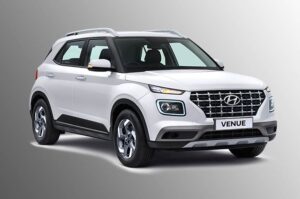
Here are some steps to help you comprehend Hyundai cars in India:
- History: Hyundai entered the Indian market by launching its first car, the Hyundai Santro, in 1996. Since then, they have released numerous successful models, such as the i10, i20, Verna and Creta.
- Manufacturing: Hyundai India operates two factories in Chennai, one at Sriperumbudur near Chennai and the other near Irungattukottai. The Sriperumbudur plant can produce 700,000 cars annually, while Irungattukottai’s capacity is 300,000.
- Sales and Service: Hyundai boasts an expansive network of dealerships and service centres across India, boasting over 500 dealerships and 1,300 service centres nationwide. This makes it convenient for customers to access sales and repair facilities when needed.
- Popular Models: Hyundai’s popular models in India include the Santro, Grand i10 Nios, Aura, and Elite i20 Venue Creta Verna Tucson. The company has recently introduced electric vehicles such as Kona Electric to the Indian market.
- Features and Technology: Hyundai cars in India are known for their cutting-edge features and technology. Models range from touchscreen infotainment systems, rear parking cameras, and climate control systems to wireless charging capabilities – the list goes on!
- Marketing and Promotions: Hyundai has undertaken various marketing and promotional campaigns in India to promote its cars. To do this, the company has collaborated with prominent Indian celebrities and sports personalities for brand endorsements and promotions.
Overall, Hyundai enjoys a strong presence in the Indian market and is renowned for its high-quality cars, cutting-edge technology, and exceptional sales and service network.
1. Maruti Suzuki
Maruti Suzuki is an established automobile manufacturer specializing in producing small cars and utility vehicles in India.

Here are some key details about this popular Indian brand:
- History: Maruti Suzuki India Limited was formed in 1981 as a joint venture between the Indian government and Suzuki Motor Corporation, Japan. Production of their first car, the Maruti 800, began in 1983 and quickly became India’s most popular model. Since then, they’ve introduced several other popular models like Swift, Baleno, Alto, Vitara Brezza, and Ertiga into production.
- Production: Maruti Suzuki has two manufacturing facilities in India – Gurugram and Manesar, located in northern Haryana. These units have a combined production capacity of over 1.5 million units annually. Furthermore, the company has established an R&D centre at Rohtak, Haryana, which works on developing new technologies and products.
- Product Range: Maruti Suzuki India offers a broad selection of small and utility vehicles. Popular models include the Swift, Baleno, Dzire, Alto Wagon R Vitara Brezza and Ertiga; they also sell premium models like S-Cross and Ciaz.
- Sales & Service: Maruti Suzuki boasts an expansive sales and service network in India, boasting over 3,000 outlets and 3,500 service centres nationwide. Furthermore, they provide their customers with after-sales services such as warranties, extended warranties, and maintenance contracts.
- Corporate Social Responsibility: Maruti Suzuki is dedicated to contributing to the social and economic advancement of communities where it operates. The company has several CSR initiatives in education, healthcare, environment protection, and community development.
- Awards and Recognition: Maruti Suzuki has earned numerous awards and recognition for its products and services, including being named India’s most trustworthy automobile brand by Brand Trust Report several years ago. Furthermore, they were recognized for their manufacturing practices with awards like the prestigious Deming Prize in 2008.

