


Hybrid work models continue to redefine what it means to show up for work — and honestly, the results are messier than anyone expected. Here's the actual story: we're not returning to the old office, but we're not fully gone from it either. Instead, we've landed in a strange middle ground where companies demand three days in-office while employees quietly update their LinkedIn profiles. 68% of knowledge workers globally now operate under a hybrid model, with only 18% working in an office full-time (5 days a week). The culture shift? It's real, it's complicated, and it's reshaping everything from Zoom etiquette to real estate strategies.
The corporate world didn't plan for this permanent state of negotiation. In 2020, hybrid felt temporary — a stopgap measure until offices could reopen. Nobody genuinely believed it would stick. But hybrid work models continue to reshape organizational behavior in ways that touch compensation structures, mentorship pathways, mental health, and even how teams define "collaboration." The guardrails we're building now will determine whose careers accelerate and whose stall.
Hybrid Work Models Continue: The Adoption Surge Nobody Saw Coming
Let's start with the raw numbers. 74% of U.S. companies have permanently codified a hybrid work policy, moving away from "temporary" measures. Not testing it. Not piloting. Permanently. That shift happened faster than most boardrooms expected, partly because the alternative was hemorrhaging talent like a sieve. I once had a conversation with an HR director at a mid-sized financial services firm in Boston. She'd spent three months building what she called "the perfect return-to-office policy" — four days in-office, one flexible. On the announcement day, she had three exit interviews by lunch.
What's changed? 98% of workers say they want to work remotely at least some of the time for the rest of their careers. That's not a preference. That's a non-negotiable expectation. And companies have figured out — sometimes the hard way — that flexibility isn't something you negotiate down anymore. It's table stakes.
The interesting part: 58% of the global workforce is now "hybrid by design," meaning their roles were created specifically with flexibility in mind. These aren't people grandfathered into remote work during the pandemic. These are jobs architected from the ground up assuming people will work from multiple places. That's a fundamental shift in how work itself is being designed.

Hybrid Work Models Continue: When Retention and Culture Collide
Here's where it gets uncomfortable. About 69% of employers said their employee retention improved after introducing hybrid policies, with companies that only asked people to come in once a week seeing retention go up by 41% on average. So flexibility works. Employees stay longer. They're happier. Productivity doesn't collapse.
And yet.
29% of executives believe that employees should be in the office at least three days a week to maintain company culture. There's this haunting disconnect. Executives worry that culture erodes when people aren't shoulder-to-shoulder in a room. The data disagrees. Hybrid employees have the highest engagement rate at 35%, compared to 33% for fully remote and 27% for fully in-office workers.
Wait — hybrid workers are more engaged than in-office workers? That contradicts the gut instinct, right? (Yes, really.) The theory? People who split their time between home and office are more intentional. When you're in the office, collaboration has to earn your attention. You're not just there by default. You're there because something requires it.
The culture piece that executives are actually optimizing for — transparency, alignment, trust — doesn't require proximity. But the culture piece that does require proximity (spontaneous mentorship, relationship-building, the watercooler moments) is what they're actually losing. Most companies haven't figured out how to architect the second kind on purpose.
The Return-To-Office Pushback that Isn't Working (Yet)
By now, you've probably heard about Amazon, Microsoft, Google, Paramount demanding people back. More than half of Fortune 100 companies now require five-day in-office workweeks, compared to just 5% two years ago. The headlines are everywhere. Return-to-office mandates are "accelerating." The office is back.
Except the actual data tells a different story. US office utilization retreated to 67% of January 2020 levels in early 2026, down from a 75% peak seen in 2025. Despite all those mandates. Despite the headlines. Actual attendance is dropping, not rising.
What's happening? A study by researchers at the University of Pittsburgh and University of Chicago found that companies implementing strict return-to-office mandates experienced significant increases in employee departures, with senior and tenured employees being the most likely to leave, and these experienced workers have the professional networks and market credibility to find flexible positions quickly. The people you're forcing back are your most replaceable-seeming employees? Actually, the opposite. They're the ones with options.
Here's the bitter irony: 64% of remote workers would quit or start looking for a new job if their employer stopped allowing remote or hybrid work. Companies are mandating return-to-office while quietly watching their institutional knowledge walk out the door.
The mandate approach is signaling. Current policy changes are modest tightening rather than sweeping mandates, with fixed hybrid remaining dominant across sectors including technology, finance, healthcare, energy, and retail, and most large employers appear to have settled into enduring workplace frameworks. Translation: most companies have already made their peace with permanent hybrid. The ones still broadcasting mandates are the exceptions, not the rule.
Why Hybrid Work Models Continue to Drive Real Business Outcomes
Let's talk numbers you can hang on a wall.
Organizations observe a 12% reduction in turnover when they allow employees to engage in remote work. Companies save an average of $11,000 per year per part-time remote worker. These aren't soft metrics. This is spreadsheet stuff. When you factor in recruitment costs, onboarding, and the lost productivity of turnover, hybrid work becomes a financial argument, not a values argument.
And productivity? Hybrid teams are 5% more productive than both fully in-office and fully remote setups, according to Stanford research. The research is consistent: focused work at home, collaboration in office, and the model hums.
But here's the catch (and there's always a catch): Dissatisfaction with hybrid policies tends to surface not when flexibility disappears, but when it feels slightly tighter than expected, and that desire–plan gap is a leading indicator of hiring friction and retention risk. People aren't leaving because they got hybrid. They're leaving because they were promised hybrid and then got three days minimum with no flexibility on which three days, and the structure changed mid-quarter.
The Talent War: Why Hybrid Work Models Continue to Reshape Hiring
38% of professionals are already looking or planning to look for a new role in the first half of 2026, with 55% ranking hybrid as their top choice, with workers evenly split among those wanting 1-2 days vs 3-4 days in the office.
This is the leverage point. Hybrid isn't nice-to-have anymore. By 2026, hybrid work has shifted from being a differentiator to being a filter, and organizations that remove flexibility from roles where it is feasible should expect smaller applicant pools and slower acceptance, even if everything else remains competitive.
A few practical implications:
- If you're hiring senior talent: They've probably figured out what their ideal hybrid arrangement is. If your open role is less flexible than their last job, they'll skip it. Period.
- If you're competing in tech: In technology, 74% of new job postings are fully on-site and 18% hybrid, which means the small percentage of hybrid tech roles get absolutely flooded with applications.
- If you're transparent about your actual culture: People believe you. Organizations that offer hybrid but communicate it vaguely often fail to realize the benefit, and in hiring, clarity matters as much as flexibility itself.
Here's what I've noticed talking to recruiters: the companies winning are the ones who say, "We're hybrid. Here's exactly what it looks like. Here's why we chose those days. Here's how you'll connect with the team." The ones losing are the ones who say "flexible hybrid" and then enforce a hidden calendar of mandatory collaboration hours that nobody told you about.
The Culture Conversation Nobody's Having Yet
Hybrid work models continue to force organizations to define what culture actually is.
Are you optimizing for spontaneous collaboration? Then Tuesday and Thursday bring people together, and you design office space around it, with good meeting tech and actual catering (not stale bagels). Are you optimizing for deep work? Then people come in for specific projects, not a fixed schedule. Are you optimizing for mentorship? Then you pair it with structured programs, not luck.
What most companies are actually doing: none of these. They're saying "three days in office" because it's a number that feels reasonable, then wondering why nobody spontaneously collaborates and the junior people aren't learning anything.
76% of hybrid workers cite improved work-life balance as a top benefit of their arrangement, 64% say the model allows them to work more efficiently, and 61% report less burnout compared to fully in-office work. But here's the contradiction: 39% of workers say their level of work-related stress has increased since last year, a reminder that hybrid flexibility does not automatically eliminate workplace pressure.
People are less burned out but more stressed. That's not a contradiction. It's a sign that hybrid work shifted pressure around. Remote work reduced commute stress and gave back time. But it also blurred boundaries between work and personal life. The office days are more intense. The tools require constant coordination. You're thinking about work constantly.
Frequently Asked Questions
How do Hybrid Work Models Continue to Impact Company Culture?
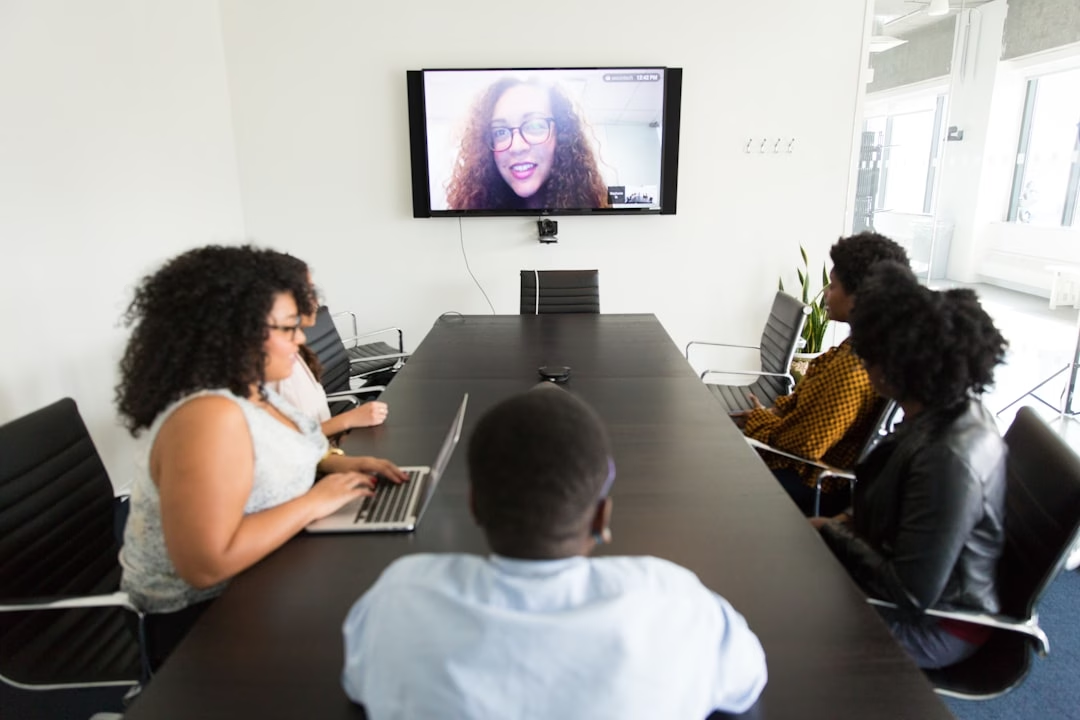
Hybrid work models continue to reshape culture in complex ways. Hybrid workers are the ones who are most likely to feel a strong connection to their company and colleagues, challenging the idea that productivity, culture, and collaboration only happen face-to-face. The shift requires intentionality: office days must serve a purpose (collaboration, mentorship, strategic alignment), not exist as default. Companies that architect culture explicitly outperform those waiting for spontaneous connection.
What Percentage of Companies are Using Hybrid Work Models Continue?
74% of U.S. companies have permanently codified a hybrid work policy, according to recent data from 2026. Additionally, 67% of companies offer some level of flexibility (hybrid work), though the exact structures vary widely. The trend toward permanent adoption (rather than temporary arrangements) has been consistent since 2023.
Can Hybrid Work Models Continue to Reduce Employee Turnover?
Yes. About 69% of employers said their employee retention improved after introducing hybrid policies, with companies that only asked people to come in once a week seeing retention go up by 41% on average. Turnover reduction of 12% is common when organizations support remote work. However, effectiveness depends on clear communication and consistency—vague or shifting hybrid policies trigger departures.
Do Hybrid Work Models Continue to Affect Productivity Levels?
Research confirms hybrid productivity gains. Hybrid teams are 5% more productive than both fully in-office and fully remote setups. The model works because it separates focused work (better at home) from collaboration (better in-person). Results vary by role: knowledge workers see the biggest gains, while roles requiring hands-on coordination see smaller improvements or potential declines.
How are Return-To-Office Mandates Affecting Hybrid Work Models Continue?
Despite headlines about mandates, stricter return-to-office (RTO) initiatives by Fortune 200 employers have not produced lasting momentum in actual office use, and most companies appear to be sticking with hybrid work structures adopted during the pandemic, even as they nudge attendance requirements upward. Mandates are tightening (three to four days instead of flexibility), but true reversals to full-time office remain rare outside finance and government.
The Bottom Line: What Actually Matters Right Now
Hybrid work models continue to shape the workplace, and the organizations winning are the ones treating it as a strategic asset, not a concession.
The game isn't whether to offer hybrid work anymore. That decision is made. The game is how to structure it so people actually connect, grow, and deliver. That means rethinking what your office is for, being explicit about which meetings require presence, designing mentorship into your culture instead of hoping for it, and resisting the urge to tighten policies every time someone publishes a "return to office is back" headline.
The companies losing are the ones offering vague flexibility while secretly enforcing invisible rules, mandating days without purpose, and forcing senior people back to the office right before they find jobs with better flexibility. The ones winning are designing hybrid from first principles — defining culture, architecture, and expectation upfront.
Your best employees will leave if flexibility disappears mid-career. Your culture will erode if office days have no intentionality. Your productivity will plateau if you don't separate deep work from collaboration. The data is clear. The path is just hard to walk.

