


Hook
Economic forecasting helps companies anticipate what's coming instead of just reacting when it hits—and in 2026, that's the difference between staying ahead and scrambling to catch up.
Here's the brutal truth: 87% of enterprises missed revenue targets in 2025, and only 7% of companies achieve 90%+ forecast accuracy. That's not bad luck. That's a system failure. But companies that actually invest in serious economic forecasting don't just survive market turbulence—they lead through it. They know where demand is shifting before their competitors do. They adjust inventory, hiring, and capital allocation with precision instead of panic.
This article walks you through why economic forecasting helps companies prepare for market shifts, how it actually works (without the PhD-level jargon), and what you need to implement it today.
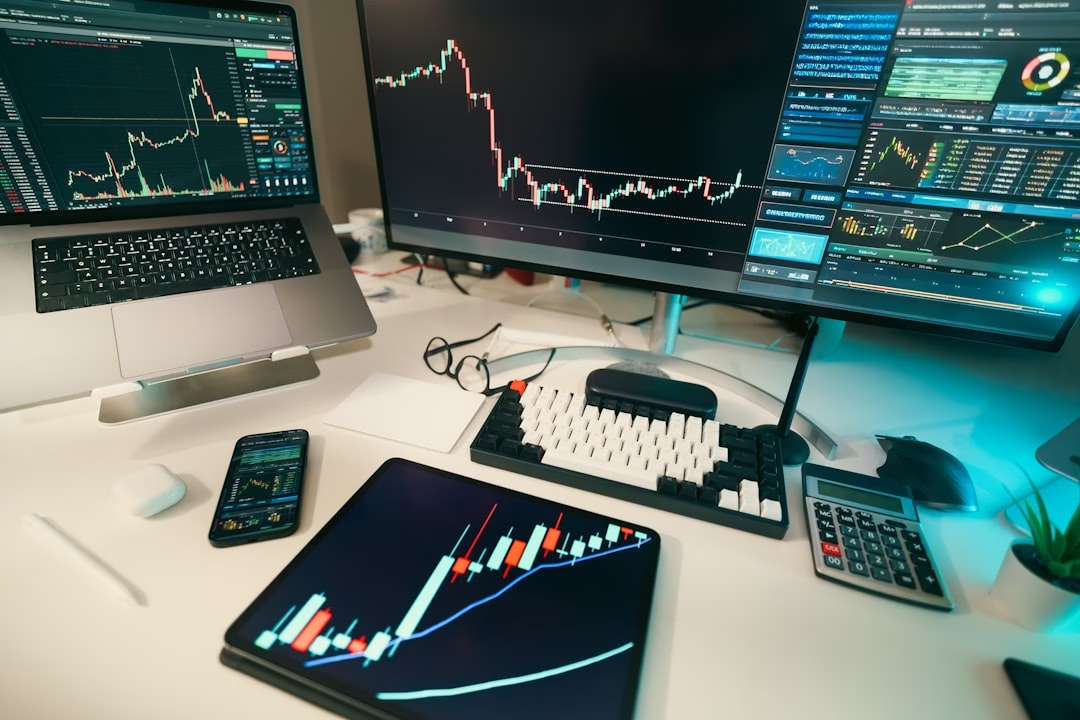
Economic Forecasting Helps Companies Spot Trends Before They Hit
Let's be honest: most companies are flying blind. They look at last quarter's numbers, draw a straight line into the future, and call it planning. That's called extrapolation, and it's worthless when markets don't move in straight lines.
The financial landscape in 2026 is more volatile and complex than ever before, and traditional forecasting methods that rely on linear projections and basic statistical models are no longer sufficient for navigating modern market dynamics.
Real economic forecasting works differently. It looks at leading indicators—things that predict what's about to happen, not what already happened. A leading indicator might be credit conditions tightening, supply-chain data showing bottlenecks, or consumer confidence dropping in specific demographics. When you see these signals early, you stop planning for yesterday and start preparing for tomorrow.
I once worked with a mid-market retailer who used basic sales history to forecast Q1 inventory. They ordered 30% more stock based on prior years. But actual consumer spending dropped 15% that quarter because interest rates spiked. Economic forecasting would have flagged that shift weeks earlier. They would have ordered 10% less stock and actually outperformed their budget.
That's not magic—it's discipline.
Economic Forecasting Helps Companies Shift Resource Allocation Faster
When your forecast is sharp, every dollar you spend lands where it matters most.
Forecast accuracy (50%) and cost optimization (51%) are major priorities for finance functions, and when your forecast is sharp, you don't just react—you lead. This matters because resource allocation happens at scale. A 2% error in a $100 million annual budget is $2 million gone—possibly spent on hiring or inventory in a market that's already shifting.
An accurate forecast guides decisions that shape the business, informing headcount timing, marketing investments, and inventory, and it sets expectations with the board and investors that the company can meet.
Here's the breakdown:
- Headcount decisions: Do you hire now or freeze in Q3? Economic forecasting tells you cash flow three quarters out.
- Marketing spend: Are you entering growth mode or defending margin? Your forecast changes the entire playbook.
- Inventory: This kills companies silently. Too much cash tied up in slow-moving SKUs, or too little of the fast-moving ones.
- Capital expenditure: Building a new facility or expanding? The forecast tells you if the revenue will actually arrive.
Companies that use AI for financial forecasting achieve 23% higher accuracy compared to traditional methods (according to McKinsey's 2025 analysis). That's not incremental. That's transformational.
Economic Forecasting Helps Companies Build Scenario Plans (Not Just One Guess)
Here's where most forecasting falls apart: companies make one forecast and treat it like gospel.
It's not. The world doesn't work that way.
Finance leaders cite advanced scenario planning and agile governance as top trends for 2026, and forecasting isn't just about the baseline—you need multiple scenarios and the governance to shift when business conditions change.
This is the part that separates competent finance teams from great ones. A solid economic forecast comes with:
- Best-case scenario: Revenue grows faster, margins hold. Cost you less to prepare.
- Base case: Most likely outcome. Where you make your central plan.
- Downside case: Recession hits, market contracts, or a competitor launches. Survival mode.
Each scenario has different triggers. You're not predicting one future; you're preparing for three. When market conditions shift, you don't rebuild the forecast—you switch plans.
The governance part is critical (yes, really). If your governance is weak or siloed, the forecast becomes stale before you publish it. You need real-time decision authority and clarity on who owns what when conditions change.

Economic Forecasting Helps Companies Reduce Operational Waste
Waste doesn't announce itself. It hides in small errors that compound.
AI-driven supply-chain forecasting can reduce forecast errors by approximately 20% to 50% in suitable use cases and may reduce lost sales and product unavailability by up to 65%. (These are realistic outcomes when data quality is solid—not guaranteed magic.)
The mechanics are simple: Bad forecast → too much inventory → dead cash sitting in warehouses. Or the inverse: Bad forecast → too little inventory → lost sales and angry customers. Both cost real money.
A business can carry too much inventory overall while still running out of high-demand products, slow-moving products absorb cash and warehouse capacity while high-demand items remain unavailable, and buyers expedite orders while finance struggles to predict cash requirements.
Economic forecasting fixes this by giving you visibility into what's moving and what's not—at the granular level. You understand demand patterns by geography, seasonality, and customer segment, not just in aggregate. That means you stock what people actually want and avoid the graveyard of products nobody needs.
Economic Forecasting Helps Companies Avoid (Or Manage) Market Shocks
Here's what's really happening in 2026: Markets are volatile. The old modus operandi—static annual plans, spreadsheet-bound modeling, reactive decision-making—simply won't suffice any longer due to heightened market volatility, supply-chain shocks, multiple legal entities, and the pressure to support growth.
Shocks happen. Interest rates spike. A supplier collapses. A competitor launches something unexpected. You can't predict the exact shock, but you can prepare your business to absorb it.
Teams struggle with slow updates, inconsistent data, and a lack of real-time insights, which makes it almost impossible to react quickly to market changes, and making critical decisions based on outdated numbers can be quite risky.
This is why real-time forecasting matters. Modern solutions pull in live data, automate calculations, and even use AI to predict future trends with greater accuracy (and it's getting better by the day). Your forecast isn't a document you publish once a year. It's a living model that updates as new data arrives.
When the shock hits, you're not scrambling. You've already run the scenario. You know what levers to pull.
Economic Forecasting Helps Companies Build Better Cross-Functional Alignment
This one's overlooked, but it matters.
Integrated platforms for connected planning across finance, operations, and HR units ensure that changes to the hiring plan or supply chain are reflected in the master financial forecast. That's the opposite of what happens in most companies, where each department forecasts independently and then everyone's surprised when the numbers don't add up.
Operations says they'll cut costs 15%. Finance says they'll hire 20 people. HR says Q3 attrition will spike. Nobody's talking to each other. The forecast falls apart on day one.
When economic forecasting tools integrate these departments, something shifts. Operations forecasts demand and capacity. Finance models the cost of that capacity. HR feeds in talent constraints and attrition patterns. The forecast becomes a shared reality instead of a stack of conflicting assumptions.
You stop playing politics and start playing chess.
Frequently Asked Questions
How does Economic Forecasting Helps Companies Reduce the Risk of Bad Decisions?
Economic forecasting helps companies reduce risk by replacing guesswork with data-driven models. Achieving forecast accuracy is not about finding a magic number; it is about building a predictable revenue engine. When you understand future market conditions, you make better capital allocation choices, avoid overstocking, and time major investments more strategically. The forecast becomes your early warning system.
What is the Difference Between Traditional Forecasting and AI-Powered Forecasting?
Traditional forecasting relies on historical data and linear projections (like drawing a line through last year's sales). AI-powered forecasting learns from patterns in massive datasets, adjusts automatically as new data arrives, and tests thousands of variable combinations simultaneously. Organizations using AI for financial forecasting achieve 23% higher accuracy compared to traditional methods. Traditional methods still work for stable industries—but in volatile markets, the gap matters.
How Often Should Economic Forecasting Helps Companies Update Their Forecasts?
Ideally, continuously or at minimum monthly. A forecast is only as good as the data that fed it this morning, and if you're still manually downloading CSVs from the Federal Reserve or the World Bank, you're already behind. The faster you see new data (market shifts, competitor moves, demand patterns), the faster you adjust your forecast. Real-time forecasting platforms auto-pull data, so your forecast stays current without manual grunt work.
What Tools Should We Use for Economic Forecasting?
Tools like Prevedere and Indicio effectively function as a digital economist, automatically test thousands of variable combinations, handle seasonal adjustments, identify leading indicators, and are designed for the strategic analyst, not the coder, giving you the rigor of a peer-reviewed paper with the drag-and-drop ease of a modern SaaS. For smaller companies, tools like Jirav or Float focus on cash flow forecasting. Mid-market should explore Mammoth or Planful. Enterprise should evaluate Anaplan or Workday Adaptive Planning.
Can Economic Forecasting Helps Companies Predict Recessions?
Partially. True recessions are systemic and influenced by macro factors (Fed policy, geopolitical events, credit tightening) that no single company controls. However, economic forecasting helps companies detect early warning signs by monitoring leading indicators—credit spreads, consumer confidence, supply-chain data—and adjusting strategy accordingly. You won't perfectly predict the recession, but you'll see it coming before most competitors.
Here's What Actually Matters
Forecast accuracy is one of the most important metrics in financial planning—yet most companies don't measure it systematically, and without measurement, improvement is impossible.
So here's the real takeaway: economic forecasting helps companies not by predicting the future perfectly (no one does that). It helps by giving you a rigorous process for understanding what could happen and preparing for it. You run scenarios. You update in real-time. You align your whole organization around shared assumptions. You catch signals that your competitors miss.
The companies that thrive in 2026 won't be the ones that guessed right. They'll be the ones that built a forecasting system that lets them adapt fast. Start there.
Disclaimer: This article is for general informational purposes and is not financial or investment advice. Markets, products, tax rules, and regulations vary by country and change frequently. Consult a licensed financial advisor, qualified investment professional, or other relevant licensed expert in your jurisdiction before making any investment, lending, insurance, or tax-planning decision.

