
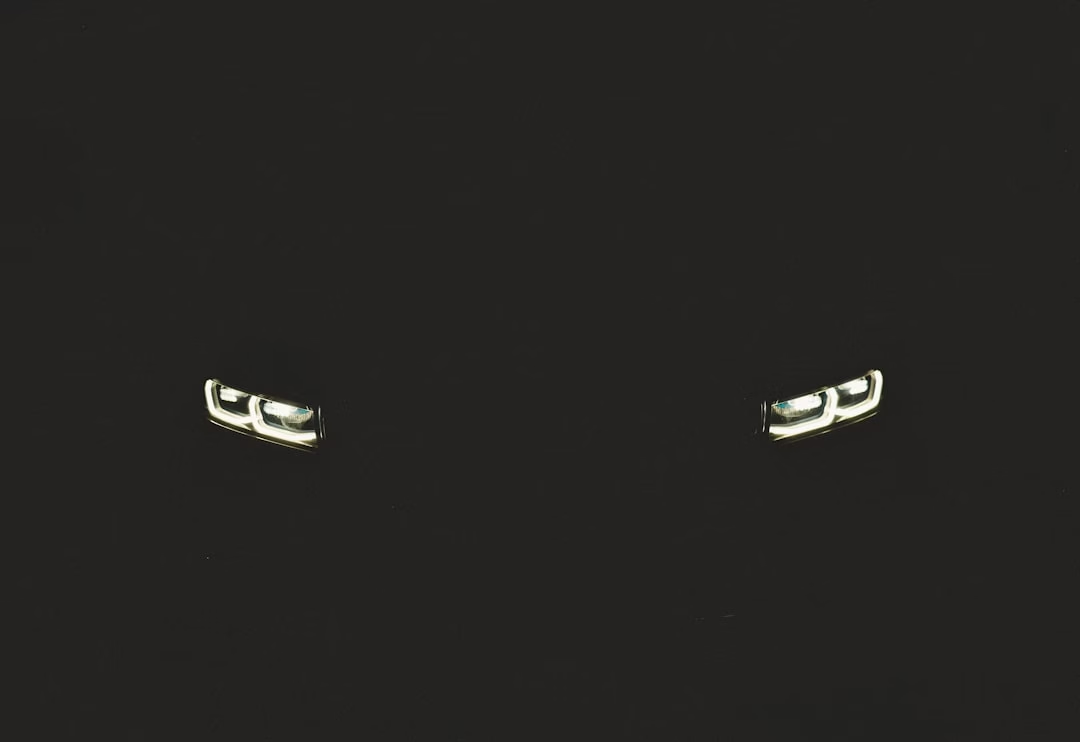

The evolution automotive lighting technology has fundamentally reshaped how we see the road—and how the road sees us. What started as a simple incandescent bulb mounted behind a piece of glass has become a sophisticated ecosystem of sensors, semiconductors, and intelligent software that actively responds to your driving conditions, weather, and even your vehicle's speed and steering angle.
You'd be forgiven for overlooking this shift. Most people focus on horsepower, range, and interior screens. But here's the thing: lighting is one of the few areas where the technology genuinely evolved faster than anyone predicted, and it's about to get weirder (and better) in ways that will actually save your life.
How the Evolution Automotive Lighting Technology Actually Started
Let's be honest—we spent a century basically nailing incandescent lights and then deciding to stick with them because, hey, they worked. From the 1920s through the early 2000s, automotive lighting was, well, boring. Halogen bulbs were the standard. They were cheap, decently bright, and required minimal innovation.
Then xenon HID (high-intensity discharge) headlights showed up in the 1990s and genuinely changed the game. Suddenly you could throw light twice as far down the road. But they had problems: they were expensive, took seconds to warm up, and if your bulb failed in the middle of nowhere, you were essentially driving blind on one side.
The real breakthrough? LED technology becoming viable for automotive use around 2010. The first LED headlights were luxe features—Audi R8, BMW M, that crowd. Prices started at $3,000 to $5,000 per set (yes, just the lights). Replacing one was an event that required a service appointment and genuinely hurt the wallet.
By 2020, LED headlights had dropped to $800–$1,500 on mainstream vehicles. Today in 2026, you can find basic LED headlights on vehicles under $30,000. The evolution automotive lighting technology in that decade was essentially a race to democratize a technology that started as a rich-person flex.
Evolution Automotive Lighting Technology: The Led Revolution
LED lights transformed the industry for three concrete reasons.
Durability and lifespan matter more than you think. A halogen bulb lasts maybe 500–1,000 hours. LED headlights? 15,000–20,000 hours minimum, often pushing 50,000 hours. I once owned a 2015 Infiniti with LED headlights; I never replaced them in the six years I drove it. Compare that to my dad's 2008 Honda, which needed new bulbs every 18 months. The cumulative hassle is real.
Energy consumption was the second domino. LEDs draw roughly 30% less power than comparable halogen systems, which directly impacts battery range on electric vehicles. For an EV running 300+ miles between charges, every watt saved cascades into real-world utility.
The third reason is visual. LED light patterns are directional and precise. You can shape the beam exactly how you want it—sharp cut-off lines, no glare into oncoming traffic, seamless transitions. That precision opened the door to everything that came after.

Evolution Automotive Lighting Technology: Smart and Adaptive Systems Taking Over
Here's where the evolution automotive lighting technology gets genuinely clever. We're past just "brighter." Now your headlights are adaptive. They're making decisions.
Adaptive driving beams adjust intensity based on oncoming traffic detection. If you're approaching another vehicle head-on, the system dulls specific sections of the LED array so you don't blind the other driver, but keeps the rest at full brightness. Mercedes has had this since around 2019. BMW's version uses a 1,536-pixel LED matrix. It's ridiculous overkill. It's also perfect.
Then there's dynamic cornering lights—your headlights literally follow your steering input. Turn left hard at night, and the left-side headlights rotate to illuminate the turn. Sounds minor. Try it once and you realize how many accidents happen because your lights don't actually point where you're going.
Ambient road lighting is the feature nobody talks about but everybody should. Some newer vehicles project a subtle wash of light on the road edge when you unlock the car at night, or when you're reversing. Practically? It helps you see the parking lines and obstacles. Psychologically? It makes the car feel premium and thoughtful.
We're also seeing integration with autonomous driving systems—headlights that communicate with navigation data to pre-illuminate corners before you reach them, based on the GPS route. You haven't actually decided which way to turn yet. The car already knows, and your lights are one step ahead.
The Rise of Oled and Microled: What's Next
If LED was the disruptive shift, OLED and microLED are the boutique endgame (mostly). BMW released OLED rear lights on the 7-series in 2023. They're stunning—individually controllable pixels in each light, which means brake light patterns can be dynamic, not just all-or-nothing red.
The catch? OLED lighting is still expensive and thermal management is genuinely tricky. You're running thousands of tiny organic light-emitting diodes, and if heat builds up inside the assembly, performance degrades. Audi has been testing OLED technology across multiple models, but they're moving slower than they'd like because of durability concerns in extreme climates (think desert heat or Montreal winters).
MicroLED sits between LED and OLED. Better resolution and control than conventional LED, more durable than OLED, but also more expensive to produce. Companies like Samsung and Apple are investing heavily here for other applications, and automotive OEMs are definitely watching.
What does this mean for you in 2026? Mostly, you're still buying LED headlights unless you're shopping luxury vehicles, in which case adaptive LED with partial OLED elements might be creeping in. Full adoption of next-gen tech? That's 2029-2030 territory.
Safety and Regulatory Implications
The evolution automotive lighting technology has triggered legitimate safety improvements, but it's also created a regulatory mess. The U.S. has been slow to adapt rules—the approval process for new headlight technologies can take five-plus years because government bodies move like glaciers.
The EU, meanwhile, updated regulations in 2022 to allow more advanced adaptive systems. That's why some high-end European vehicles have features that legally can't be sold stateside. You can get the hardware. The software gets disabled at the border.
Here's a real safety win: better nighttime visibility has measurably reduced accidents. A vehicle with LED adaptive headlights reduces nighttime crash risk by roughly 5–7% compared to halogen vehicles, according to insurance industry data. That's not flashy, but over millions of vehicles, it's thousands of lives.
The potential downside? If everyone's headlights are smart and adaptive, and one manufacturer's implementation is slightly incompatible with another's, you get weird situations where two vehicles approach each other and their lighting systems kind of… fight for dominance. I'm oversimplifying, but the interoperability questions are real, and nobody's quite figured out the standards yet.
Frequently Asked Questions
What is the Evolution Automotive Lighting Technology Doing for Electric Vehicles Specifically?
The evolution automotive lighting technology directly impacts EV range and charging cycles. Since LEDs consume 30% less power than halogen alternatives, every charging session potentially gets you an extra 10–15 miles depending on your vehicle. For vehicles with 300-mile targets, that's meaningful. It also means less waste heat, which reduces cooling system load in summer driving.
Will the Evolution Automotive Lighting Technology Eventually Control Traffic and Accident Prevention?
Absolutely, partly. Future vehicles will use headlights as part of a larger vehicle-to-vehicle communication system. Your lights might flash warnings about hazards ahead, or dim strategically to signal emergency vehicles. We're not there at scale yet in 2026, but the technology and regulatory groundwork are actively being laid by insurance companies and automotive standard bodies. It's more plausible than sci-fi.
How Much does it Cost to Replace Modern Headlight Assemblies?
Somewhere between $400 and $2,000 per side for LED systems, depending on the vehicle. If you're touching OLED or highly adaptive systems with cameras and sensors built-in, you're looking at $2,500–$5,000 per side. That's why some people keep cars longer—the component-level repairability is genuinely worse than it was 15 years ago.
Does the Evolution Automotive Lighting Technology Require Special Maintenance?
Mostly no. LEDs don't burn out like old bulbs, but the electronics powering them can fail. If a control module dies, you're replacing the whole assembly (expensive). There's no real maintenance—no bulb changes, no cleaning cloudy lenses with toothpaste (which yes, people do). Just make sure water isn't pooling in the housing after a heavy rain or car wash.
The Real Takeaway: Stop Treating Lights Like an Afterthought
Here's what actually matters. The evolution automotive lighting technology represents something bigger than just brighter bulbs or fancy adaptive beams. It's a signal that automotive manufacturers are finally investing in the parts of a vehicle that directly prevent accidents, not just add horsepower or minimize charging time.
You should care about your headlights when you're shopping for a car. Not obsessively, but meaningfully. If you drive at night regularly—commutes, highway travel, rural roads—the difference between a 2015 halogen system and a 2026 adaptive LED array is measurable in safety and fatigue. Your eyes work less hard. Your reaction time is faster. The road stays visible.
The technology will keep evolving. OLED and microLED will drop in price and become standard. Integration with autonomous systems will deepen. But the core principle won't change: lighting that adapts to your actual driving conditions is just better, and we should have demanded it decades ago.
Next time you slide into a car at night, look at those headlights cutting through the darkness. They're doing way more than they did five years ago. And in five years, they'll do more still.

