
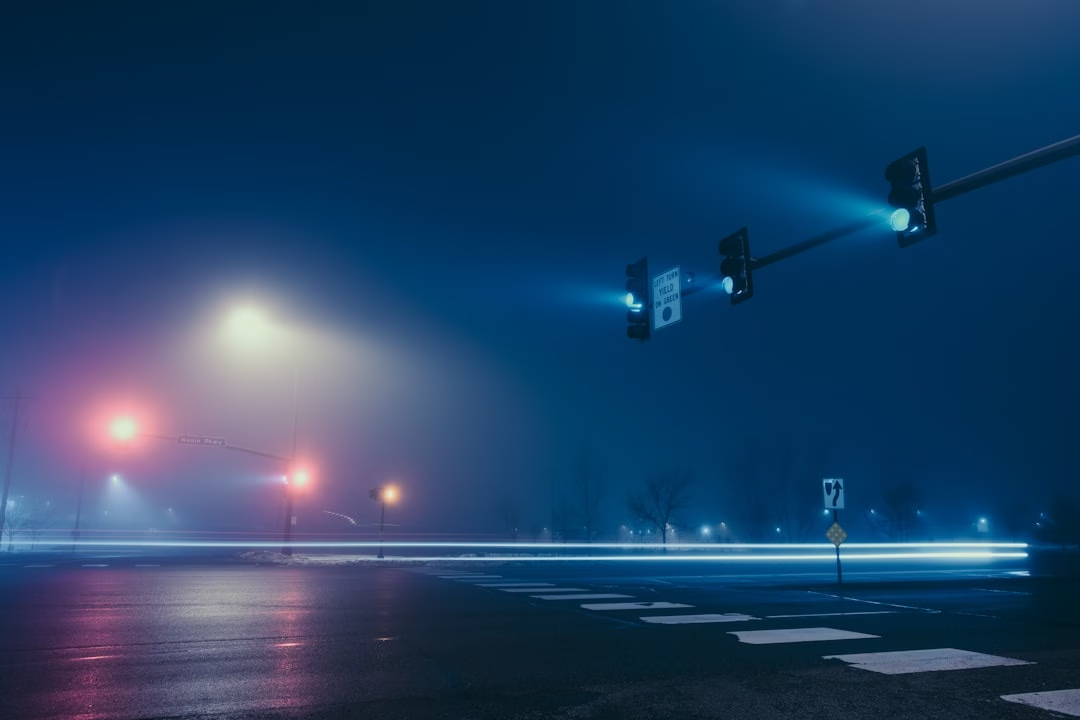

I'll research current data on intelligent traffic signals to ensure the article includes accurate, up-to-date information.# How Intelligent Traffic Signals Urban: Smarter Cities, Real Results
Intelligent traffic signals urban mobility management has moved from a nice-to-have pilot project to a genuine infrastructure necessity in 2026. Cities are tired of watching drivers idle at red lights while parallel streets sit empty. The global intelligent traffic signal system market was valued at USD 8.2 billion in 2025 and is estimated to grow at a CAGR of 11.9% to reach USD 26.8 billion by 2035 — and that trajectory tells you everything about how seriously municipalities are betting on this technology.
The real story isn't just the numbers though. It's about fundamentally rethinking how cities move people and goods. Traditional traffic lights are dumb. They're pre-programmed. They don't adapt. And honestly? They're failing us. Signals drive 28% of urban traffic delay, but 70% of that delay stems from insufficient capacity. Intelligent traffic signals urban systems flip that script by introducing AI, real-time data, and responsive algorithms that learn and adjust on the fly.
If you've ever sat fuming at a red light while no traffic crossed in front of you, this article explains why that's about to change — and why cities are racing to deploy these smarter systems right now.
Why Traditional Traffic Signals are Broken
Let's be direct. The traffic lights installed in most cities over the past 30 years use logic from the 1980s. They run on pre-programmed schedules. A traffic engineer sits down, collects data for a few weeks, designs a signal timing plan, and then… that's it. Fixed. Locked in. For years.
Poor traffic signal timing contributes to traffic congestion and delay. Conventional signal systems use pre-programmed, daily signal timing schedules. The problem? Real life doesn't stick to a schedule. A crash happens. An event draws 5,000 extra people downtown. Weather slows traffic. Schools let out early. None of this was in the original plan. The lights just keep cycling the same way, oblivious.
I once spent 45 minutes in gridlock during a Friday night in Portland because a concert let out three blocks away and the pre-programmed signal timing had no idea. The lights were still optimized for a normal Friday night — not a concert night. Those frozen signal plans are the enemy of fluid traffic. And they're costing cities billions in wasted fuel, emissions, and driver frustration.

## Intelligent Traffic Signals Urban: How Real-Time Adaptation Works
Here's where intelligent traffic signals urban systems actually earn their name. Instead of a fixed schedule, these systems use sensors, AI, and data analytics to actively manage traffic in real time.
These systems adjust signal timings dynamically based on real-time vehicle detection using sensors, loop detectors, cameras, or radar technologies. The best systems don't just count cars — they analyze patterns. Speed. Direction. Queue length. Traffic flow momentum. They then calculate the optimal green/red cycle for that exact moment at that exact intersection.
Using sensors, data analytics, and communication systems, adaptive traffic signal control responds to changes in traffic patterns, such as rush hour congestion or unexpected delays, to reduce stops, improve travel times, and decrease fuel use and emissions.
The advantage? Massive.
- Real-time responsiveness to accidents, weather, and sudden demand spikes
- Intelligent coordination across multiple intersections (not just one signal in isolation)
- Continuous optimization — the system learns what works and refines it
- Automated emergency vehicle preemption built in
AI, machine learning, and cloud-based analytics enhance decision-making, allowing cities to manage congestion, respond to accidents, and optimize pedestrian flow far more efficiently than hardware-focused systems alone. In other words, software matters as much as the traffic signal box itself.
## Intelligent Traffic Signals Urban: The Numbers that Matter
You want proof this actually works? Here's what the data shows.
Smart traffic signals reduce travel time by 15% and emissions by 10% in pilot programs, according to ITS America 2022. That's not speculation. That's documented. And some cities report even better results — travel time reductions hitting 30% in targeted corridors.
Let's put that in real terms. If you commute 45 minutes daily in a typical US city, a 15% reduction means saving nearly 7 minutes per day. That's an hour per week. Five hours per month. And you're not the only one saving it — every commuter in that city benefits. Multiply that across millions of daily trips, and you're looking at genuine economic value.
Then there's the environmental angle. Adaptive traffic signals reduce urban congestion, enhance safety, and cut emissions by 30%. Fewer stops mean less fuel burned. Less idling. Lower carbon footprint. Cities trying to hit climate targets can't ignore this.
As cities adopt AI-enabled adaptive traffic signals, IoT-enabled sensors, and cloud-connected platforms, demand for professional services to deploy, configure, and optimize these systems is rising. The market is booming because the results are real.
The Technology Behind Intelligent Traffic Signals Urban
What actually powers these systems? It's a mix of three core technologies, and understanding them helps explain why cities are investing heavily right now.
Sensor networks. Dense sensor arrays (lidar, cameras, inductive loop detectors) monitor vehicle presence, speed, and queue depth at each intersection. These feed continuous data streams to the central system.
Edge computing and AI. The system processes this data locally (at the intersection or at a regional hub) using machine learning algorithms. This avoids latency issues that cloud-only solutions introduce. The AI doesn't just react — it predicts. Based on patterns, it anticipates congestion and adjusts proactively.
V2X communication (Vehicle-to-Everything). Newer systems integrate with connected vehicles and infrastructure to share data directly. An autonomous bus can tell the traffic system "I'm running 2 minutes behind schedule." The signals adjust to help you move through intersections faster. Advantech's Adaptive Traffic Control Systems utilize advanced technologies such as AI, Vehicle-to-Everything (V2X) communication, Time-Sensitive Networking (TSN), and robust cybersecurity measures to enhance urban traffic management.
Here's the catch: implementation complexity. Mostly. You can't just swap out old signal boxes and expect magic. Cities need to install sensors, run fiber optic lines (or use wireless), integrate systems with existing infrastructure, and staff people who understand the software. That's expensive. Toronto, Vancouver, and Montreal are doing it. Shanghai. Beijing. London. Chicago. The cost is real, but the ROI usually pays off within 2–3 years.

Real-World Deployment: Who's Actually Using this
Intelligent traffic signals urban systems aren't theoretical. Canada is projected to grow at a significant CAGR in the intelligent traffic signal system market due to rising urbanization, increasing traffic congestion in major cities, and government-led smart city initiatives. Cities such as Toronto, Vancouver, and Montreal are experiencing rapid population growth, resulting in higher vehicle density and frequent traffic bottlenecks. To address these challenges, municipalities are investing in AI-driven adaptive traffic signal systems, IoT-based sensors, and cloud-enabled traffic management platforms that optimize signal timing, reduce delays, and improve road safety.
The US market? The U.S. Intelligent Traffic Signal System Market held an 83.6% share, generating USD 2.4 billion in 2025. And the U.S. market was valued at USD 1.8 billion in 2024 and is expected to grow from USD 2.0 billion in 2025 to USD 3.0 billion by 2033, with a CAGR of approximately 5.7%.
What about adoption velocity? The vehicle actuated signal systems segment dominates the market accounting for around 40.1% share in 2025, and the segment is expected to grow at a CAGR of over 11.5% from 2026-2035. Translation: cities are shifting from fixed-time systems to vehicle-actuated and AI-based systems faster than expected.
Challenges You Should Know About
Real talk: intelligent traffic signals urban implementation isn't a plug-and-play win. Several problems persist.
Data quality and accuracy. Sensors fail. Cameras get dirty. Loop detectors wear out. If your input data is garbage, your optimization is garbage. Cities need robust maintenance programs, which many have underfunded for years.
Interoperability hell. Different vendors use different platforms. Different cities use different standards. A system optimized for one traffic corridor won't automatically work when you extend it. Challenges involve balancing transit priority with general traffic flow, system interoperability, and ensuring real time data accuracy.
Cybersecurity. Traffic signals control critical infrastructure. A compromised system could create gridlock or enable attacks on vehicles. Challenges include navigating complex regulatory environments, ensuring cybersecurity, and managing high capital expenditure requirements. This isn't paranoia — it's genuine risk.
Equity concerns. Which neighborhoods get smart signals first? If wealthy areas get optimized systems and low-income areas don't, you've just created a mobility inequality problem. This is being debated in cities right now.
The penetration paradox. Here's something few people mention: The penetration–benefit relationship follows a logarithmic trend, with rapid gains at low penetration levels and progressively weaker marginal returns as deployment expands. In other words, adding intelligent traffic signals urban systems to 10% of your city's intersections gives huge benefits. Adding them to 90% of intersections gives diminishing returns. You hit an optimization ceiling.
Frequently Asked Questions
What Exactly is an Intelligent Traffic Signals Urban System?
An intelligent traffic signals urban system uses real-time data from sensors and AI algorithms to dynamically adjust signal timing across intersections. Unlike fixed schedules, intelligent traffic signals urban systems respond to live traffic conditions, reducing congestion and improving flow. They integrate cameras, radar, loop detectors, and sometimes vehicle-to-infrastructure communication to optimize green/red cycles second by second.
How Much Can Intelligent Traffic Signals Urban Systems Reduce Congestion?
Most studies show 15–30% reductions in travel time and 10–30% reductions in emissions. The exact figure depends on local conditions, system coverage, and integration quality. Pilot programs consistently demonstrate measurable improvements within 6 months of deployment.
Do Intelligent Traffic Signals Urban Systems Work for Pedestrians and Cyclists?
Yes. Modern adaptive systems optimize for all road users — not just cars. They detect pedestrian button presses, adjust crossing times dynamically, and can prioritize bike lanes during peak cycling periods. Safety typically improves because smoother traffic flow means fewer dangerous conflicts.
What's the Cost to Implement Intelligent Traffic Signals Urban Systems?
A typical smart intersection (sensors, processing hardware, software license, installation) runs $150,000–$300,000 depending on complexity. A city with 500 intersections might budget $75–$150 million for full deployment. Most cities recover costs within 2–4 years through reduced congestion and lower operational overhead.
How does Machine Learning Improve Intelligent Traffic Signals Urban Performance Over Time?
The AI observes traffic patterns, detects recurring congestion points, and refines its optimization models continuously. It learns that Monday mornings require different timing than Friday afternoons. It learns where accidents cluster. It learns which pedestrian crossing patterns are safe vs. risky. The system gets smarter the longer it runs.
The Clear Takeaway
Intelligent traffic signals urban systems are no longer optional. The conversation is shifting from experimental pilots to the scalable, operational reality of Physical AI, appearing to be the year when the convergence of advanced sensing, edge computing, and artificial intelligence moves past the theoretical to become a key component of our urban infrastructure.
Cities that move first get the advantage. You save time commuting. The environment benefits. Traffic flows better. Emergency vehicles move faster. The economic case is solid: congestion costs time, fuel, and lives. Intelligent traffic signals urban systems reduce all three.
The real question isn't whether your city should deploy these systems. It's whether they can afford not to. As roads get more crowded and commute times stretch longer, every minute you delay is a minute of wasted productivity and burned fuel. Some cities are already moving. The rest will follow. Make sure yours isn't left behind.

